Supplier relationship control
Manage supplier profiles, type, contacts, payment details, status, own-fleet context, child-tenant links, portal access, assignment status, and performance signals.



Codefy ERP Module
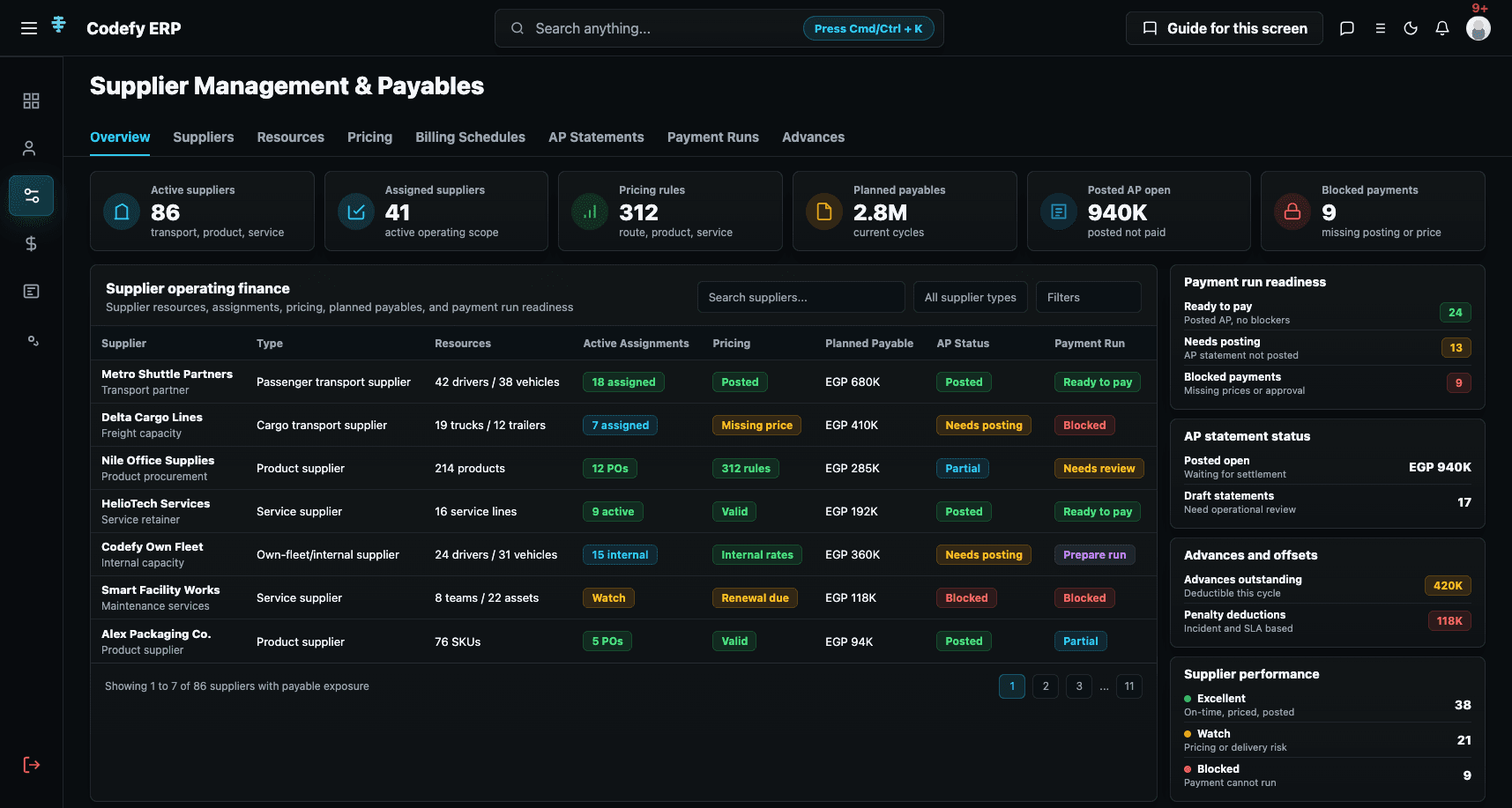
Manage transport, cargo, product, and service suppliers from profile setup through pricing, assignments, planned payables, AP statements, advances, deductions, offsets, payment runs, and performance review.
Operating Chain
Supplier work breaks when operational records and payable records are managed apart. Codefy ERP keeps supplier profiles, resources, pricing, billing schedules, AP statements, advances, offsets, and payment runs connected to the work suppliers actually deliver.
Step 1
Create supplier
Step 2
Attach resources
Step 3
Set prices
Step 4
Assign work
Step 5
Generate payables
Step 6
Apply deductions
Step 7
Run payments
Supplier Controls
Supplier payables belong close to supplier operations because billing schedules, delivered work, advances, penalties, offsets, and payment runs all depend on supplier context. Finance still owns the accounting ledger, journals, reconciliation, and financial statements.
Manage supplier profiles, type, contacts, payment details, status, own-fleet context, child-tenant links, portal access, assignment status, and performance signals.
Connect suppliers to drivers, vehicles, products, services, active assignments, schedule coverage, and operational resource readiness.
Control supplier price rules, pricing validation, billing schedules, payment percentages, trigger days, and billing-cycle scope before payable documents are generated.
Review planned payables, supplier AP statements, advances, loans, penalties, credits, offsets, balances, payment runs, and settlement status before finance posting and reconciliation.
Smart Logic
Codefy ERP treats supplier payables as an operational finance workflow: price rules, schedule assignments, billing cycles, completed work, advances, loans, penalties, offsets, and statement status shape the payable before it moves into accounting control.
Keep supplier records useful for operations, procurement, finance, and management instead of treating suppliers as only payment recipients.
Manage the resources a supplier provides, so assignments, pricing, and payables are tied to real operating capacity.
Control supplier pricing before work is assigned or generated, with price rules, route and schedule pricing, validation, request-change workflows, and sensitive field access.
Define how supplier billing cycles work, then generate planned payables from the right schedules, periods, payment percentages, trip basis, and supplier memberships.
Review supplier AP documents, statement periods, document status, payment status, opening balances, accruals, deductions, paid amount, and posted open balance.
Keep supplier deductions and credits close to the supplier payable cycle, including cash advances, supplier loans, automatic deductions, penalties, offset sales, and credit application.
Screens
The module needs one supplier workspace for profiles, resources, pricing, assignments, and performance, plus one payable workspace for billing schedules, AP statements, balances, advances, offsets, and payment runs.
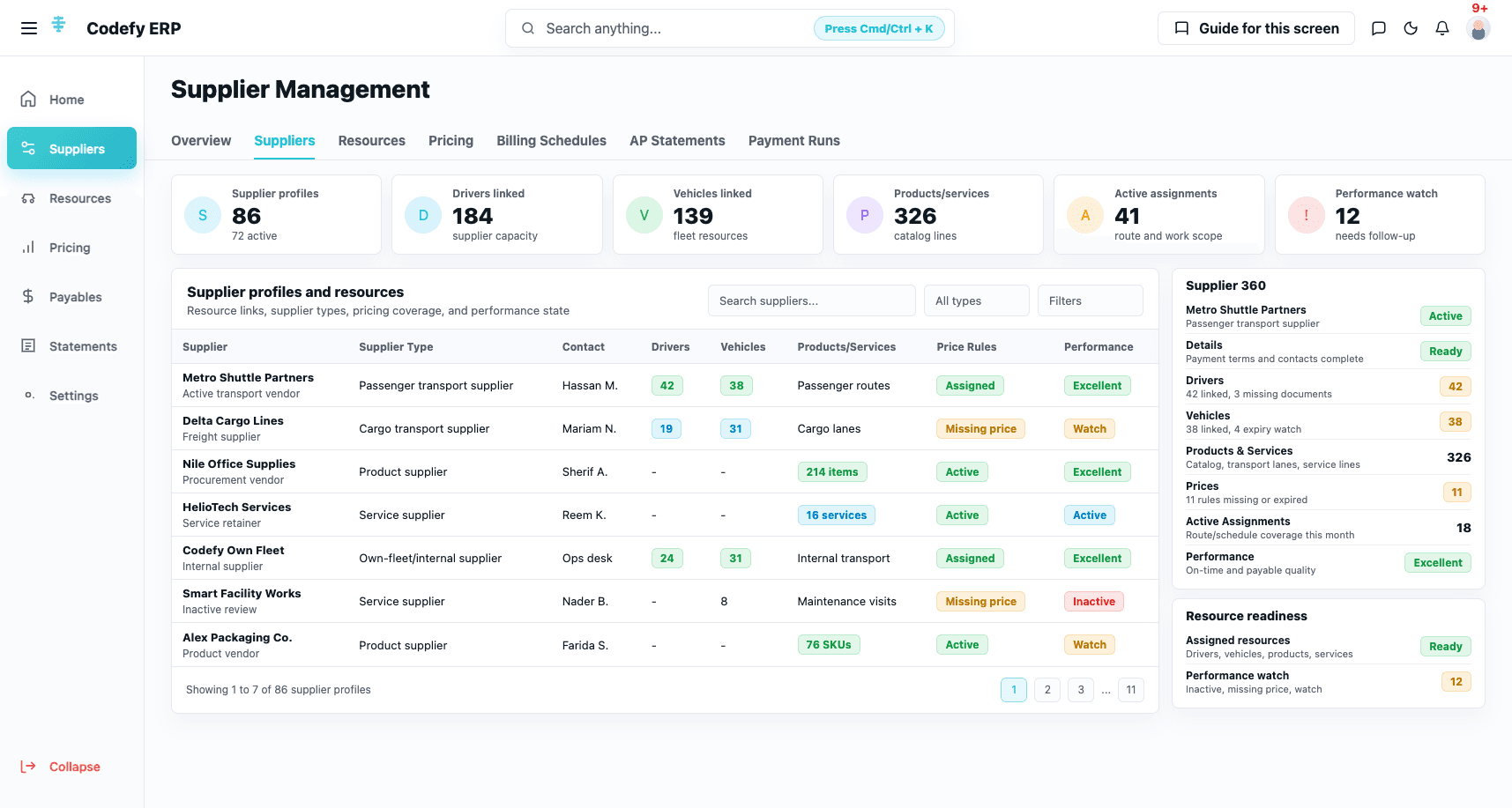
Supplier workspace
A seller-side workspace for supplier profiles, transport/cargo/product/service types, drivers, vehicles, products, services, pricing, assignments, payment details, and performance.
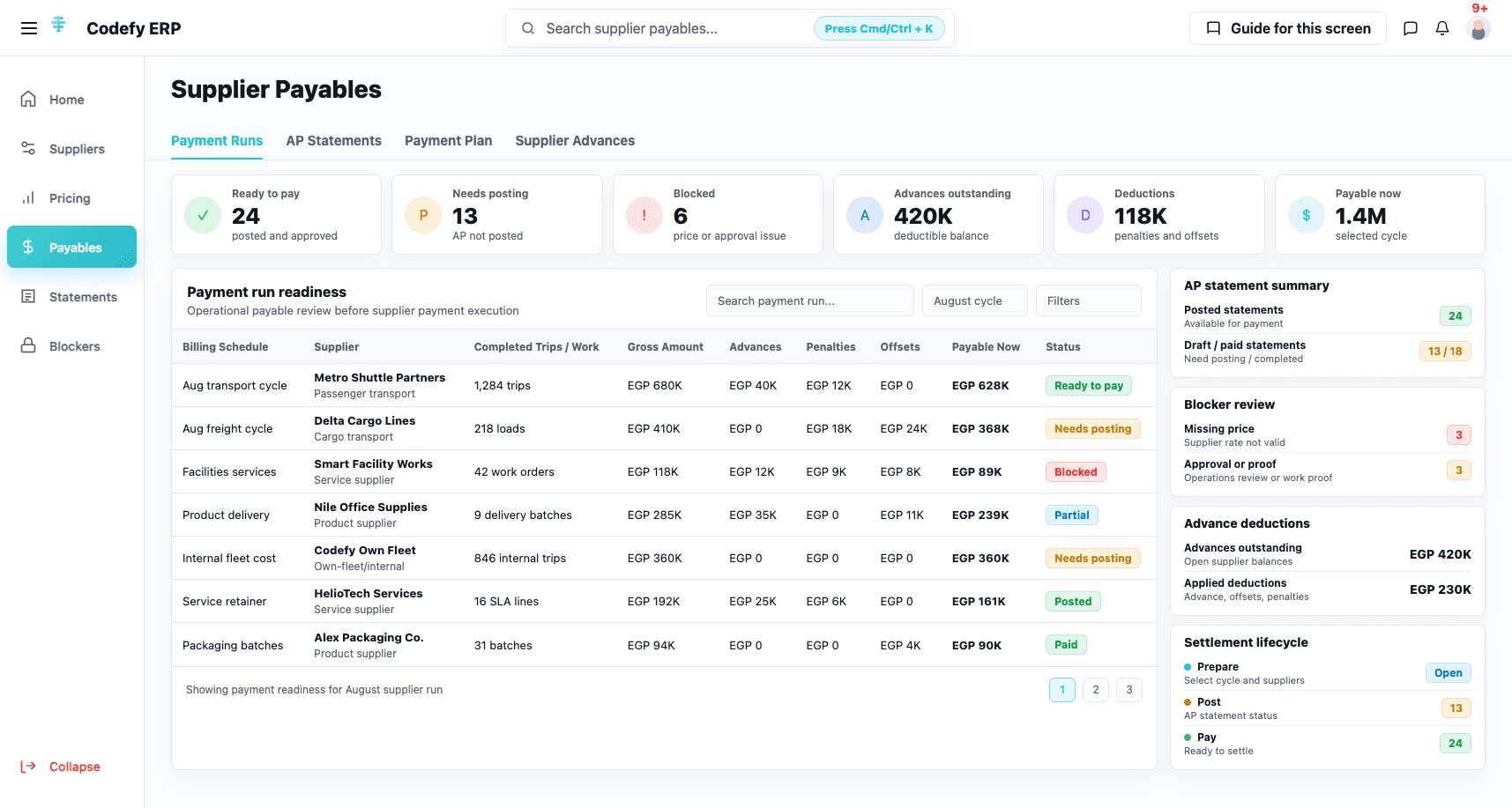
Payables and payment runs
Finance operations can review planned payables, AP statements, balances, advances, penalties, offsets, blockers, selected suppliers, payment runs, and settlement status.
Commercial Value
The same supplier records support profile control, resources, pricing, assignments, billing schedules, AP statements, advances, offsets, payment runs, and performance review.
Operations teams control supplier resources, assignment readiness, and pricing before work reaches trip generation or delivery execution.
Supplier payables stay with supplier operations, so billing schedules, completed work, advances, penalties, offsets, and payment runs remain explainable.
Finance keeps the accounting layer for AP ledger, journals, reconciliation, cash flow, period locks, financial statements, and audit controls.
Management can inspect supplier performance, workload, payable exposure, cost variance, blocked payments, deductions, and settlement status from one supplier workflow.
We can review your supplier records, pricing rules, billing schedules, payable documents, advances, penalties, offsets, payment runs, and accounting handoff, then map the right Codefy ERP starting point.